by Maui Sunriders | Feb 1, 2017 | Blog
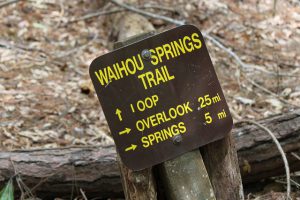
For those looking to experience a different side of Maui, this hike is for you. If you’re pressed for time or want to hike and bike upcountry Maui on the same day, this trail is just right!
WHERE is Waihou Spring Trail?
Waihou Spring Trail is just up the road from Makawao in the Waihou Spring Forest Reserve. It is an intermediate level trail that also works as an easy forest stroll if you skip the last part which is a short but steep hike down into a ravine with some interesting caves. Getting back out can be a challenge if you’re out of shape.
How long of A Hike is Waihou spring trail?
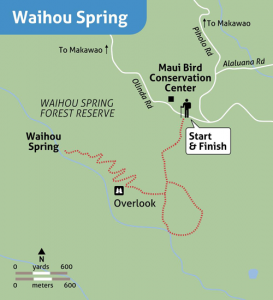
The trail is about a mile or so round trip and takes about 1 – 2 hours if you’re not in a hurry. This is a short hike compared to some of the others, yet it will give your body a workout and fill your senses with the sights and sounds of the Waihou Spring Forest. The reserve is bordered by the state-run tree experimentation project, which is nearly 100-years old. This secluded hike features a variety of non-native species of trees such as Eucalyptus and Monterey cypress. Additionally, hikers can listen to native island birds such as bright red honeycreepers singing their song. Even axis deer may be seen occasionally.
What to expect when hiking WAIHOU TRAIL
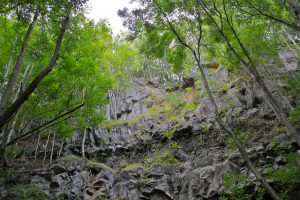
Along the trail, an overlook provides some  views between branches of the beautiful trees down the slope of Haleakalā towards the valley. A narrow, steep, and rocky trail leads down into Kailua Gulch. This canyon is scattered with boulders and is home to several caves which are actually old water diversion tunnels can also be seen cut into the face of the cliffs that surround you. Waihou Spring can be seen from here also surrounded by large fern and moss-covered stones. The spring even offers a bit of a cool breeze. The spring may be dry depending on the weather. This area of the Kailua Gulch is great for adventure exploring. Heavy canopied forests and open forests are also included along this hiking trail.
Directions to The Waihou spring trail loop
Directions to Trailhead: From downtown Paia, hwy 36, turn onto Baldwin Avenue and follow through the town of Makawao. Baldwin Ave. turns into Olinda Road. Stay on this road and follow it for almost five winding miles. Go up the winding road and it will bring you to the trail head of Waihou Spring Forest Reserve. You will also see a sign for the Tree Growth Research Area entrance.
Tip: Bring plenty of drinking water, snacks, camera, comfortable hiking boots or walking shoes, and mosquito repellent.
by Maui Sunriders | Jan 4, 2017 | Blog
While renowned for its gorgeous beaches, the majestic island of Maui is also known as one of the most beautiful places on earth because of its unique geographic features. What do we mean? Well, as you drive along the coast, you see a stunning ocean on one side and impressive mountains standing regally on the other. The striking beauty of these opposing landscapes is truly breathtaking.
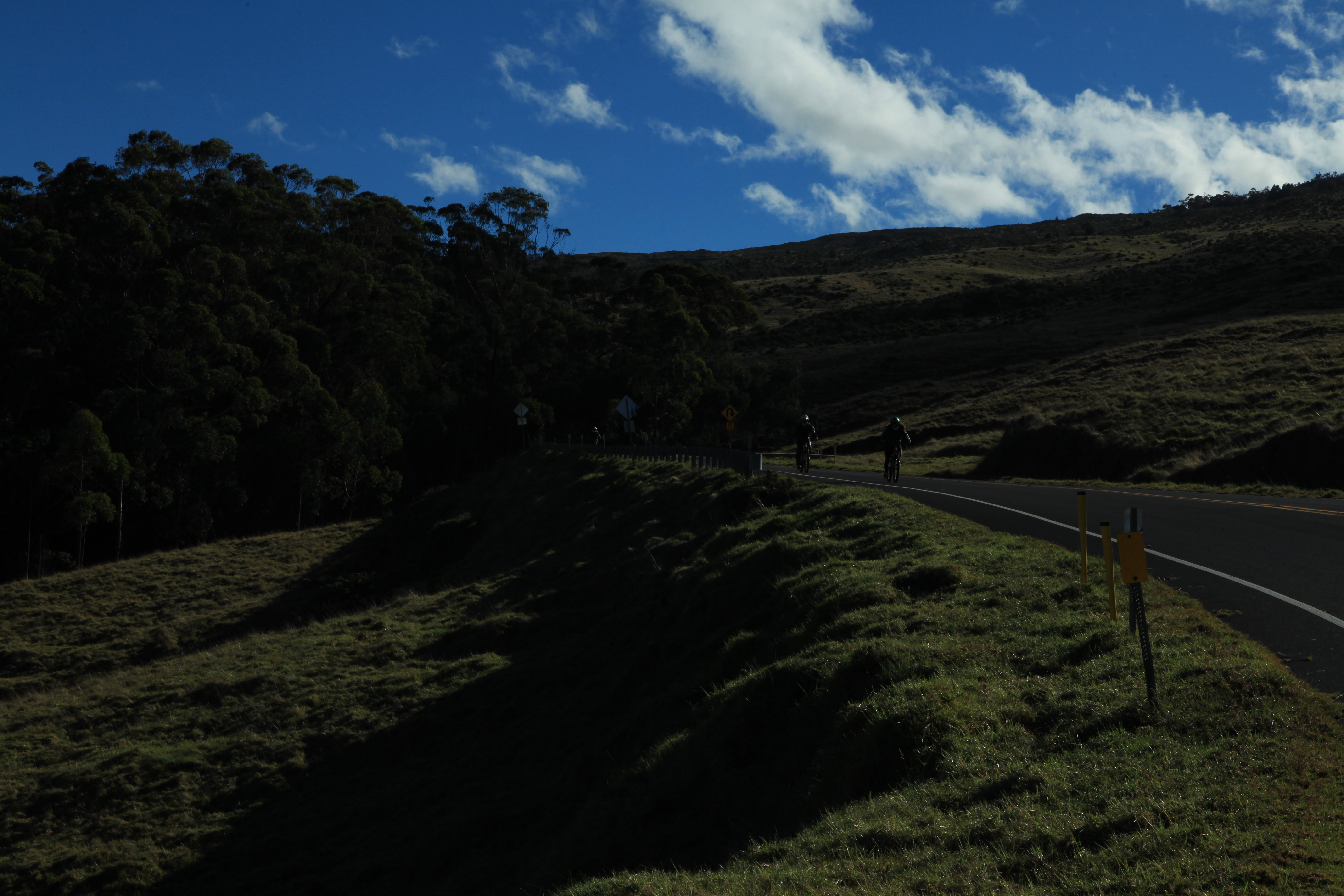
And these divergent geo-features are what create a multitude of distinct microclimates that can best be seen on our Maui volcano tour of Haleakalā. Only on this bike tour will you get to experience a wide range of climates that make up Maui as you start at the top of the Haleakalā volcano and ride all the way down to the sea. But are these climates that diverse? What are some of the different microclimates you bike through on the Maui volcano tour?
Tropical cloud forests. As you make your way biking down the volcano below the forest line, you’ll see a unique change, a striking increase in vegetation in an area known as the cloud forest zone. This area, often featuring ground-level clouds, is at just the right elevation and has the right trade wind patterns combined with a significant increase in rainfall and cloud condensation to be, as the National Park Service described, “dripping with red and green native ferns.”
As you travel to lower elevations on the Maui volcano tour, you’ll transition into slightly different microclimates, more lush as you bike down, each with slightly different plant-life and weather conditions.
Flower farms, tropical gardens and rolling hillsides. Although still in the cooler mountain air of Upcountry, the area around the town of Kula is teaming with beautiful gardens and even farms of exotic flowers like protea, carnations, lavender, and other tropical flora. At an elevation of about 3,200 feet, Kula Lodge and Restaurant offers breathtaking views of surrounding mountains and the Pacific Ocean. Kula means “open country” in Hawaiian and aptly describes how the climate and vegetation shifts slightly in this area to a more open-air, dry, rural country set amid rolling green hillsides and offers the perfect climate and soil for farming.
Old sugar plantation areas. Further down the mountain sits a flat-lying area where acres of sugar cane fields once flourished. This tropical farming area sits closer to sea level and once helped to make Paia a bustling plantation town.
Sea level. Finally, you reach Paia Town and the ocean. As you end your Maui sunrise bike tour, you return to the warm ocean climate that most people think of when picturing Maui. This charming town is the heart of the North Shore and boasts some of Maui’s most beautiful white sand beaches.
The diverse microclimates you’ll not only see but also get to explore on the Maui sunrise volcano tour create a truly one-of-a-kind experience. From lush tropical gardens featured on the winding roadway of the mountain to the open-air pastureland settled on hillsides near Kula and finally back to the ocean, the amount of climate change you’ll experience is incredible. And all of this you can see in just under 2 hours (that is if you don’t stop to take in the sights, but we suggest you do stop along the way on our self-paced tour). Nowhere else can you experience the distinctive array of landscapes and climates that are collectively known as Upcountry Maui.
by Maui Sunriders | Jul 8, 2015 | Blog
Maui Sunriders is located in the small town of Paia, Maui. We love our little bohemian town for it’s unique town center, great shopping, colorful community members, and of course, awesome location— a great little beach town on the North Shore.
A few months ago, we upgraded our bike fleet. We feel like it’s important to have top of the line gear for our downhill bicycling customers, so we upgrade every year or two.
But we wondered what to do with 45 Trek bikes that we were retiring? They were all in reasonably good condition and Trek bikes are high quality machines. Then it hit us, the Paia Youth & Cultural Center!
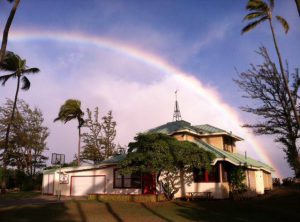
Paia Youth & Cultural Center under a rainbow sky.
The Paia Youth & Cultural Center or PYCC as it’s more commonly called is a local United Way agency that provides daily activities— including counseling, mentorship, and homework assistance— and life skills education for the town’s youth. They run a local radio station, a skate park, and a cafe. The PYCC serves children and youth from 9-21.
We have raised our own children on the island and have seen some of the challenges that teens face in finding positive outlets and activities.We know that the PYCC offers a very valuable resource for families and youth in our community.
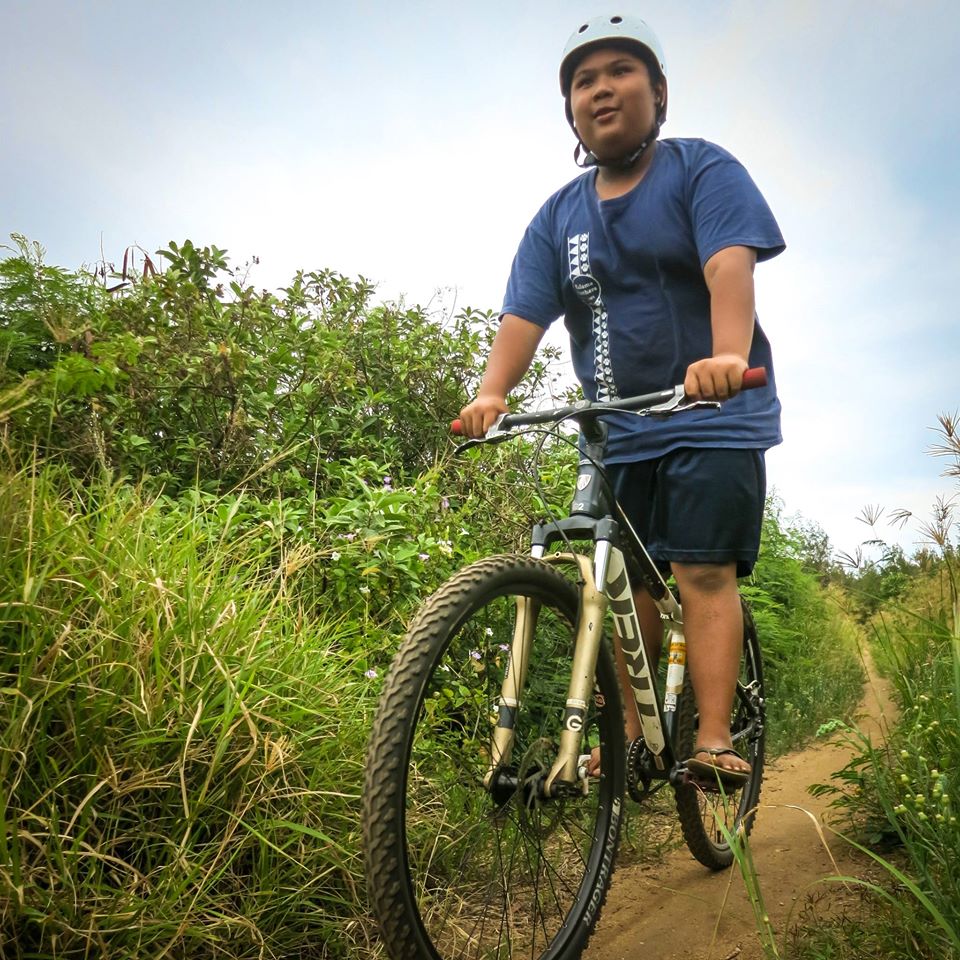
So, we decided to donate our fleet’s bikes to the PYCC, as a way to support the work that the PYCC is doing. The kids could keep the bikes at the PYCC or take them home.
We really enjoyed donating the bikes, but clearly, the kids were the ones who enjoyed it the most!
Thanks for letting us give back, PYCC! Mahalo!
Psst, you can donate here, if you think the PYCC is as awesome as we do!
by Maui Sunriders | Jul 2, 2015 | Blog
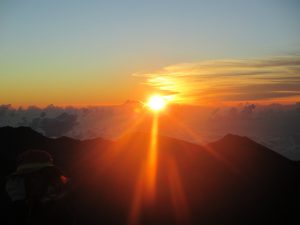
Sunrise view from the Haleakalā summit
At one of the most beautiful spots on the island, you will never forget watching the sunrise from the summit of Maui’s Haleakalā volcano—and there’s no better way to experience it than on the Maui Sunriders Sunrise Bike Tour! In order to have the best possible experience, there are a few things you will need to know!
Dress Warmly for the Summit
Believe it or not, the Haleakalā summit gets quite cold and windy in the early morning hours. While you might not expect to bring your jacket to Hawaii, you will definitely need it in the crisp morning air 10,000 feet above sea level. Temperatures at sunrise will likely be around 40 degrees Fahrenheit. If you want to bring a warm blanket for the early morning hours, you can leave it in the tour van to pickup at the end of the downhill ride.
Although the weather can be unpredictable at this altitude, we do provide wind/rain gear as part of your Haleakalā sunrise bike tour, including jackets, gloves, and pants if you need them.
Dress in Layers
Just as you don’t want to get too cold at the summit, you also want to avoid getting too hot on the way down. Bring easily removable layers on the Haleakalā sunrise bike tour to make sure you’re comfortable every step of the way. Although you might start the day in a warm winter jacket, you will probably conclude your journey in a T-shirt and shorts! We provide backpacks for each rider, so you can store these extra layers on the way down.
Bring Some Snacks and Plenty of Water
There are many restaurants along the bike route where you can buy breakfast or lunch, but you may want to pack a few light high-energy snacks to keep you going after your early-morning start. You will also want to drink plenty of water. Although you won’t be at high-altitude for very long, hydrating with lots of water and electrolytes is an important part of avoiding potential altitude sickness.
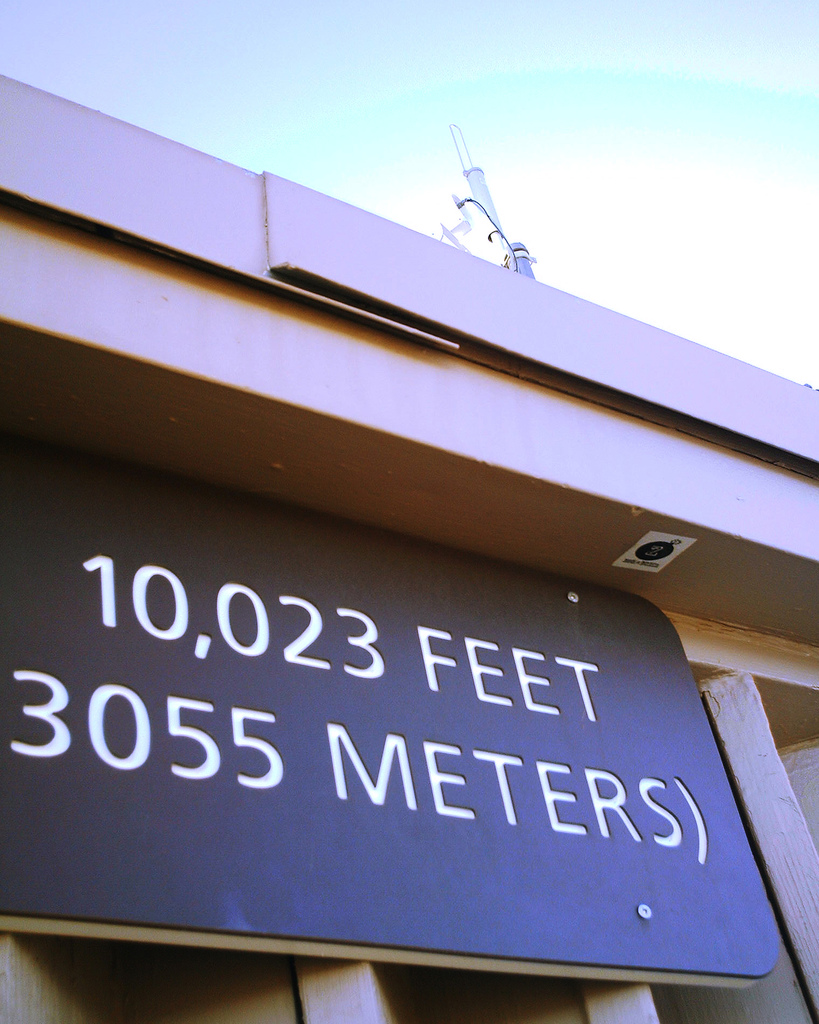
Start your journey at 10,023 feet!
Take Your Time!
Set aside a whole day for your tour and don’t be afraid to relax! There’s no race to the bottom, and in fact, the adventure begins long before you ever mount your bike. Take your time to enjoy the serene twilight in the moments before the dawn breaks, and stick around to watch the whole sunrise. The crowds can thin soon after sunrise, and you’d be surprised at how quickly you can have the majestic summit vistas almost all to yourself! Once you get on your bike, you will have plenty of time to soak up the pure mountain air and unbelievable views. The Haleakalā bike ride is all self-paced, and you don’t have to return your equipment to the shop until 4:30 p.m.
The Bike Ride is all Downhill
Our unforgettable Haleakalā bike rides are all downhill, so they are friendly to a wide range of fitness and skill levels. Riders won’t have to do any strenuous pedaling, but you will be navigating some winding mountain roads, so we want to make sure you are very comfortable with steering and breaking. If you stay focused and don’t ride recklessly, you and your companions should be able to enjoy every minute of this leisurely ride. You are encouraged to go at your own pace, and if at any time you feel uncomfortable or need assistance, we will be happy to come help or have someone pick you up.
If you have additional questions about this, or any of our other tours, don’t hesitate to contact us. Follow these tips, and we know you’ll have an amazing Maui adventure you won’t forget!
(Sunrise photo by Dustin A. Lewis via Flickr)
(Elevation marker photo by Gabriel Amadeus via Flickr)
by Maui Sunriders | Jun 17, 2015 | Blog
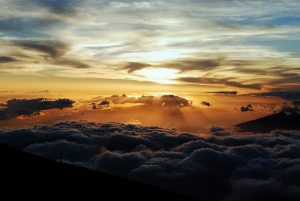 Sunrise at the summit of Maui’s majestic dormant Haleakalā volcano is one of the most beautiful sights you will ever see, and together with family and friends, you’ll be making some amazing memories you won’t ever forget. Just what is it that draws so many people to this magical spot every morning? We believe this experience is made not just because of where you are, but also who you are with! Here are a few theories on just what makes the Haleakalā sunrise so special.
ps.. keep in mind sunset is equally special and many locals will share it’s even better! Especially if you are choosing between the Haleakala sunrise bike tour, and the sunset tour.
An Amazing New Spectacle Every Day
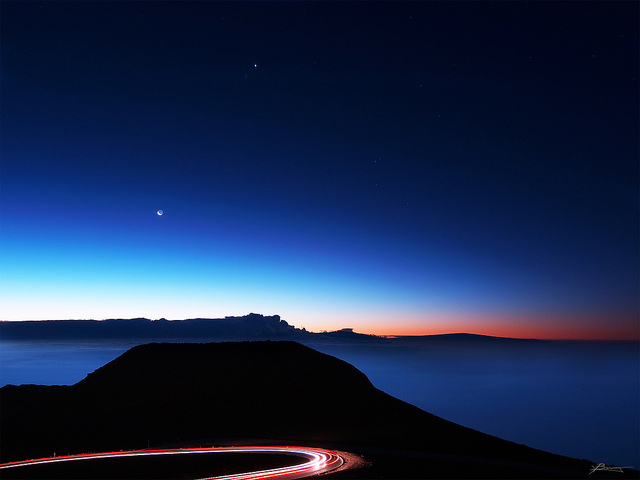
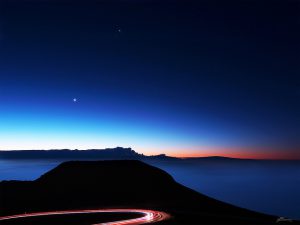
Up above 10,000 feet in elevation on an island, the weather can be widely varied and unpredictable. This means that you should come prepared with warm layered clothing, but it also means that conditions for sunrise change to create a new natural spectacle every day! Before dawn, you will typically find the sky blanketed in soft clouds stretching out towards the horizon. Up at the summit of Haleakalā, you will actually be above this cloud cover with little more that a few neighboring peaks visible. In these magical predawn moments, the view of these peaks is not unlike a miniature glimpse of the greater Hawaiian island chain below, poking up from the rolling sea of clouds. Rich warm colors will quickly spread throughout the sky before the sun begins its climb, bursting forth in a flood of warmth and color. Stick around to experience the full sunrise before you leave. Once the sun gets high enough, the thick cloud cover will often melt away, revealing the full expanse of our beautiful island below you.
A Magical Experience Rooted in Legend
The island of Maui is named after the traditional Hawaiian demigod Maui, and the Haleakalā volcano is the site of one of his famous escapades. Maui is a heroic figure, but also a bit of a trickster as well. When his mother wished for more hours of sunlight during the day for her beautiful textile crafts, Maui had to get creative. During the night, he climbed up to wait at the summit of Haleakalā, which actually means “house of the sun.” As soon as the sun rose from its bed in the crater of the volcano, Maui lassoed it and convinced it to travel through the sky more slowly for half the year during the summer.
A Once in a Lifetime Adventure
Catching the incredible colors of the Haleakalā sunrise means waking up well before dawn to get to the summit in time. Even if you’re not usually a morning person, there’s something special about the anticipation that has everyone up and focused on a common goal. Whether your traveling with friends, as a couple, or with the whole family, you’ll be making the kinds of memories you won’t soon forget.
Once you get to the summit, the predawn temperatures can be below freezing, so don’t forget to pack warm clothes or even a blanket to wrap up in. It won’t be long before the light show begins, but the time spent huddled together with your family is well worth the wait!
(Haleakalā sunrise photo by The Good Reverend Flash via Flickr)
(Predawn photo by paul bica via Flickr)
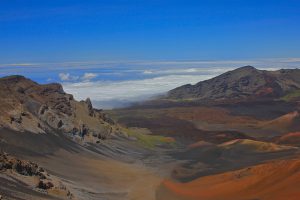
(Haleakalā crater photo by Navin Rajagopalan via Flickr)
by Maui Sunriders | May 28, 2015 | Blog
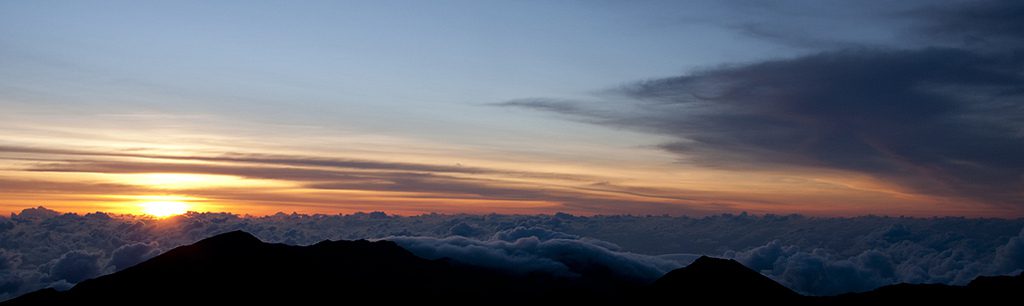
Sunrise at the summit is one of the world’s best photo ops, and you will definitely want to make sure to have a good camera ready to go! Stock up on some unbelievable images to remind yourself of your travels and share with your friends and family back home.

What Kind of Camera Should You Bring?
Up on the Haleakalā volcano, you’ll see people taking still photos will all kinds of digital cameras. These typically fall into categories of DSLRs with viewfinders and detachable lenses and “point and shoot” unibody cameras without separate lenses. What you choose to bring is up to you. DSLRs offer the best quality images and customizability, but only if you know how to use them. If you’re going to simply stay on the automatic setting, you’re really better off with a point and shoot. These compact cameras now offer high quality images with very intelligent automated settings, and remember that they are much smaller and lighter than DSLRs. Maui Sunriders provides a backpack for your gear, but it’s still a good idea to travel light. Cell phone cameras are also always growing in popularity. They offer great portability and convenience, and recent models even have pretty competitive quality. Check out this brief list from tomsguide.com of a few of of 2015’s best cell phone cameras.
Framing and Composition

A simple illustration of the rule of thirds
Get creative with framing your photos. Centering your subject (i.e. the sun or your family) can create a dramatic powerful effect, but some of the best compositions offset the subject to the side. Often this can be done according to the rule of thirds. Simply superimpose a mental grid of nine squares over your image and line up your focal point where two of the lines intersect.
Capture the Energy
Think about the energy in your picture, and remember that the flow should always be moving inwards into the frame. Talking about “energy” may sound mysterious, but it’s really easy to see once you get the hang of it. Energy merely indicates the direction someone may be looking in or where the sun’s rays are radiating. Sometimes energy can actually refer to the direction your subject is moving (like on a bike!). Again, the motion should always be traveling inward into the open part of your photo. If your subject is too close to the edge moving outwards, your whole picture will feel cramped and awkward.

Close-up framing adds energy and expression to this great Maui Sunriders moment.
Enjoy the Moment
Even with your newly honed photography skills, at Maui Sunriders, we still always like to encourage our patrons to enjoy the moment with their friends and families. Don’t spend too much time buried behind your camera or phone. Your pictures will never do the experience justice, and the moment will be over before you know it!
(Sunrise panorama by Hawaii Savvy via Flickr)