The Maui Volcano and the Legends and Facts That Surround It

The Maui Volcano and the Legends and Facts That Surround It

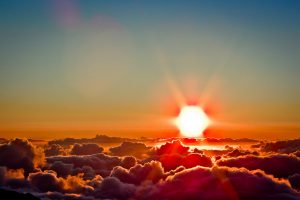
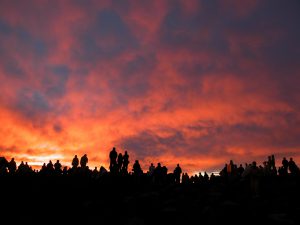
At the summit of Haleakalā, Maui’s majestic dormant volcano, it’s easy to forget where you came from as you look out onto what feels like another world. At dawn, the peak itself often becomes its own island, suspended in a soft sea of clouds amidst the scattering of smaller island peaks around you. Although the vistas from this altitude are always spectacular, these moments at dawn are some of the most magical… right before the clouds melt away.

This is, no doubt, why for millennia, mankind has been transfixed by this special spot on the legendary Maui volcano summit and inspired to tell grand stories about it. The Hawaiian people have a great oral tradition, and the story of Maui snaring the sun is one of their favorites!
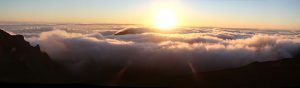
640px-Sunrise_over_Haleakalā

The Legend of Maui The Demigod and the Haleakalā Volcano

The legend goes that the trickster demigod Maui (after whom the island is named) once set out to capture the sun and convince it to slow down. His mother Hina was a great artisan but complained that she was unable to sun-dry her kapa (bark cloth) because the days were too short. Undaunted, one night Maui journeyed to the peak of the mountain Haleakalā (which actually means house of the sun) and lay in wait for the sun to wake up and rise from its crater.

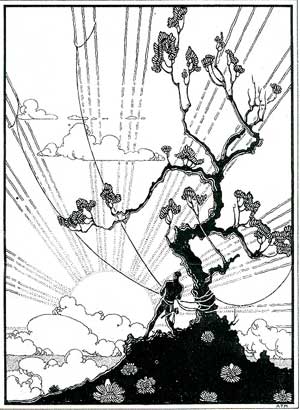
The details differ from legend to legend, but as soon as the sun showed itself that morning, storytellers agree that Maui swung a mighty lasso and snared the sun, holding it fast! He allowed the sun to go free only after it had agreed to travel more slowly through the sky for half the year. Thus the seasons were born, with shorter days in the winter and longer days in the summer. At last, Maui’s mother Hina could complete her fabrics, and the people of the islands were also able to enjoy the warmth of the sun and taste the fruits of a long growing season.
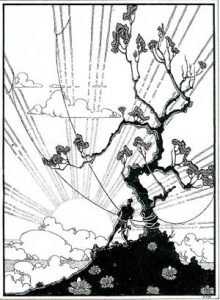
Maui_Snaring_the_Sun,_pen_and_ink,_circa_1927,_Honolulu_Academy_of_Arts

“Maui Snaring the Sun,” a pen and ink by drawing Arman Manookian circa 1927

Some Facts About the Haleakalā Volcano

The jury may still be out on the historical accuracy of this particular tale, but here are a few facts we do know about the Maui volcano!

  • Haleakalā is not actually an extinct volcano, but merely dormant. Its last eruption was in the year 1790.*
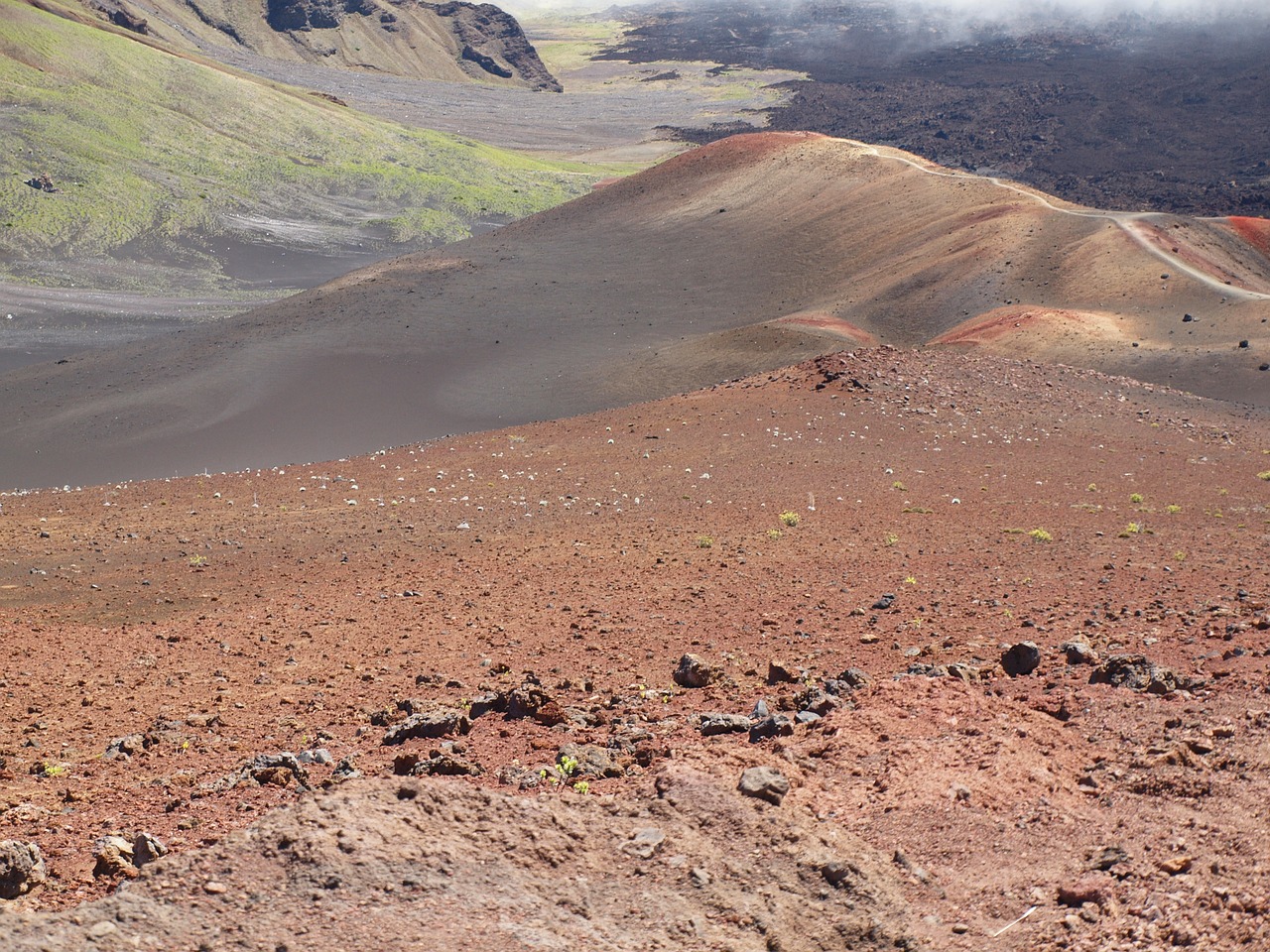
  • The “great basin” or crater below the summit is 3,000 feet deep, 7.5 miles long, and 2.5 miles wide. It was worn by long years of water and weather erosion.*
  • The summit of Haleakalā is over 10,000 feet in elevation**
  • The volcano is now encompassed by Haleakalā National Park with over 30,000 acres of beautiful landscapes and diverse wildlife. The park is a popular destination for hiking, swimming, camping, tours, and (of course) Maui Sunriders Haleakala downhill bike tours!**

** Facts provided by the National Park Service

(Sunrise photo by Ewen Roberts via Flickr)

(“Maui Snaring the Sun” courtesy of Honolulu Academy of Arts)
Experience a Multitude of Microclimates on the Maui Downhill Volcano Tour

Experience a Multitude of Microclimates on the Maui Downhill Volcano Tour

While renowned for its gorgeous beaches, the majestic island of Maui is also known as one of the most beautiful places on earth because of its unique geographic features. What do we mean? Well, as you drive along the coast, you see a stunning ocean on one side and impressive mountains standing regally on the other. The striking beauty of these opposing landscapes is truly breathtaking.

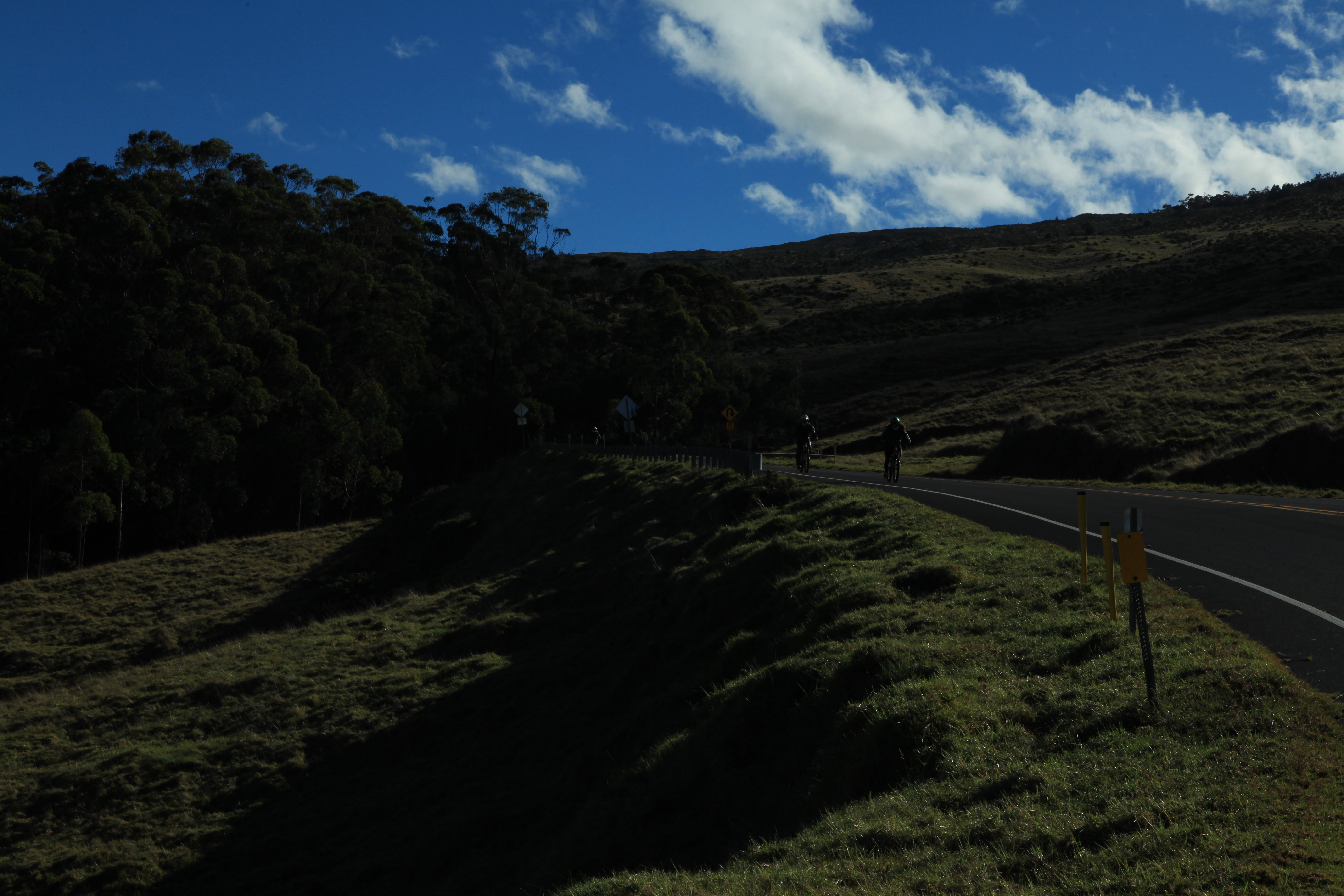
And these divergent geo-features are what create a multitude of distinct microclimates that can best be seen on our Maui volcano tour of Haleakalā. Only on this bike tour will you get to experience a wide range of climates that make up Maui as you start at the top of the Haleakalā volcano and ride all the way down to the sea. But are these climates that diverse? What are some of the different microclimates you bike through on the Maui volcano tour?

Tropical cloud forests. As you make your way biking down the volcano below the forest line, you’ll see a unique change, a striking increase in vegetation in an area known as the cloud forest zone. This area, often featuring ground-level clouds, is at just the right elevation and has the right trade wind patterns combined with a significant increase in rainfall and cloud condensation to be, as the National Park Service described, “dripping with red and green native ferns.”

As you travel to lower elevations on the Maui volcano tour, you’ll transition into slightly different microclimates, more lush as you bike down, each with slightly different plant-life and weather conditions.

Flower farms, tropical gardens and rolling hillsides. Although still in the cooler mountain air of Upcountry, the area around the town of Kula is teaming with beautiful gardens and even farms of exotic flowers like protea, carnations, lavender, and other tropical flora. At an elevation of about 3,200 feet, Kula Lodge and Restaurant offers breathtaking views of surrounding mountains and the Pacific Ocean. Kula means “open country” in Hawaiian and aptly describes how the climate and vegetation shifts slightly in this area to a more open-air, dry, rural country set amid rolling green hillsides and offers the perfect climate and soil for farming.

Old sugar plantation areas. Further down the mountain sits a flat-lying area where acres of sugar cane fields once flourished. This tropical farming area sits closer to sea level and once helped to make Paia a bustling plantation town.

Sea level. Finally, you reach Paia Town and the ocean. As you end your Maui sunrise bike tour, you return to the warm ocean climate that most people think of when picturing Maui. This charming town is the heart of the North Shore and boasts some of Maui’s most beautiful white sand beaches.

The diverse microclimates you’ll not only see but also get to explore on the Maui sunrise volcano tour create a truly one-of-a-kind experience. From lush tropical gardens featured on the winding roadway of the mountain to the open-air pastureland settled on hillsides near Kula and finally back to the ocean, the amount of climate change you’ll experience is incredible. And all of this you can see in just under 2 hours (that is if you don’t stop to take in the sights, but we suggest you do stop along the way on our self-paced tour). Nowhere else can you experience the distinctive array of landscapes and climates that are collectively known as Upcountry Maui.

Haleakala Facts: Learn About Maui’s Volcano

Haleakala Facts: Learn About Maui’s Volcano

Maui is a geological treasure trove where violent volcanic activity once birthed entire islands out of the middle of the ocean. Today, a rich ecosystem of flora and fauna live alongside hardened lava flows—some of which are estimated to be over a million years old. Over the centuries, this breathtaking landscape has inspired many traditional myths and legends featuring the demigod Maui and Haleakalā (the “house of the sun”), and it continues to draw geologists and other scientists today. Here are a few fun Haleakala facts to share with your friends on your next Haleakalā volcano tour!

A Window into the Past

hale_block

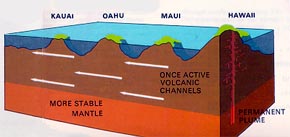
Hawaii is situated near the center of the Pacific tectonic plate where weak areas in the Earth’s crust have allowed molten lava to seep through and create a chain of volcanic islands. Maui is actually one of the younger islands in the group and was born where two volcanos joined to create the “valley isle.” Haleakalā, the larger of the two, is actually estimated to have once reached up to 12,000 feet; however, millennia of erosion have worn it down to form the signature crater at it’s summit. Today, our Haleakalā volcano tours bring you and your bike to the highest point at 10,024 feet.

sunrise on a Maui Sunriders Haleakalā volcano tour

Haleakalā Today

Now in the 21st century, Haleakalā is not actually an extinct volcano, but merely dormant and has not seen active volcanic activity since 1790. Its calmness is actually attributed to the slow movement of the Pacific Plate, meaning that over time, the island has moved northwestward away from the volcanic “hot spot.” This movement is slow—very slow—only about 2 centimeters a year, but believe it or not, this drift gradually created a string of islands that starts from Hawaii and leads 2,500 miles towards Japan. Even now, the young island of Hawaii continues to grow; however, it’s unclear whether or not the majestic island of Maui will even see volcanic activity again. Rest assured, the volcano is closely monitored, and safety plans are in place in the unlikely event the ancient mountain should ever reawaken.

Haleakalā Observatory

A Stairway to the Heavens

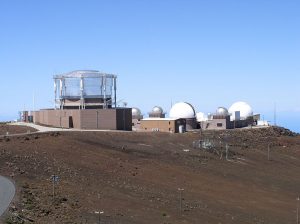
The volcano is not only a great place for biking and exploring but is also home to an astrological observatory! The same clear mountain skies that make for such beautiful sunrises on our Haleakalā volcano tours are also perfect for getting clear images of the heavens with minimal air and light pollution. At 10,000 feet above sea level, the observatory actually sits above one third of the Earth’s atmosphere—what the University of Hawaii calls “one of the most sought-after locations in the world for ground-based telescopes.” The facilities are not currently open to the public; however, their website lets you get a peak at some of their work and even view observatory webcams!

Sources:

(Haleakala Facts and geological image courtesy of the National Park Service)

(Haleakala Facts and observatory image courtesy of the USGS Haleakalā Volcano Observatory)

History of Haleakala National Park

History of Haleakala National Park

Are you planning a Maui volcano bike trip? To assist you in getting mentally prepared for this incredible journey, we felt it would be beneficial to provide you with some history of Haleakalā National Park and what you may expect to see on your Haleakala sunrise tour.

WHAT IS HALEAKALA?

Haleakalā National Park is home to the tallest peak on Maui, Haleakalā’s summit at 10,023 feet, as well as many other interesting features. The summit area of Haleakala is regarded by native Hawaiians as a sacred location, “the gods’ wilderness.” It’s said that Polynesians first arrived in Hawaii more than a thousand years ago and visited the top of Haleakala frequently. Many important cultural and historical landmarks and locations may be found in Haleakala National Park.

THE BEGINNING OF HALEAKALA NATIONAL PARK’S HISTORY

Haleakalā National Park is a United States national park located in Maui, Hawaii. It was established in 1916 and has over 30,000 acres of public property – the most famous portion of which is Haleakalā Crater. From Haleakalā’s summit, visitors may explore this intricately colored volcanic environment. Halemau’u and Sliding Sands trails are the two primary ways into the crater. The Haleakalai crater area is home to many unique and endemic species of wildlife and flora. You might observe Hawaiian geese or “nene” foraging in their natural habitat among the cinder desert around the crater.

The variety of natural environments found in the Haleakalā National Park sets it apart. From trekking across the volcanic desert of the Summit Area to exploring tropical coastal settings and waterfalls in the Kipahulu Area, Haleakalā National Park provides a wide range of picturesque views and activities.

Visitors may go camping, swim in the freshwater pools at Ohe’o Gulch (only when conditions allow), and observe the sky at the peak of this Maui volcano, among plenty of other activities that have been enjoyed here for generations.

HALEAKALA NATIONAL PARK SUNRISES

Haleakalā Sunrise Bike Tour

The Haleakalā sunrise is often the highlight of a visit to Haleakalā National Park. Many can’t believe how amazing the sunrise looks from the summit of Haleakalā. It’s one of the most unforgettable things you can do on your Maui vacation. On our Haleakalā sunrise bike tour, you can see this memorable sunrise and then bike down the Maui volcano to sea level at your own pace. As part of our Haleakalā volcano tours, we take our Maui biking guests on a narrated van tour of the Haleakalā National Park area they will be biking through.

Our experienced tour guides provide Haleakalā bike tour guests with the best and most extensive narration of the Haleakalā National Park – explaining points of interest along the route, the history of Haleakala, and interesting aspects of Hawaiian culture, and also great dining options at restaurants along the bike route. With our Maui volcano tours, guests are driven to the summit on the same route they will bike down the volcano. Maui biking guests can then enjoy a relaxing and enjoyable self-paced bike tour through the Haleakalā National Park down to sea level.

So have fun on your Maui volcano bike tour and enjoy all the amazing sights the Haleakalā National Park has to offer.